



Sober Curious? 10 Signs You Need to Listen to That Voice (And What to Do Next)
- Michael Romano
- Jun 29
- 10 min read
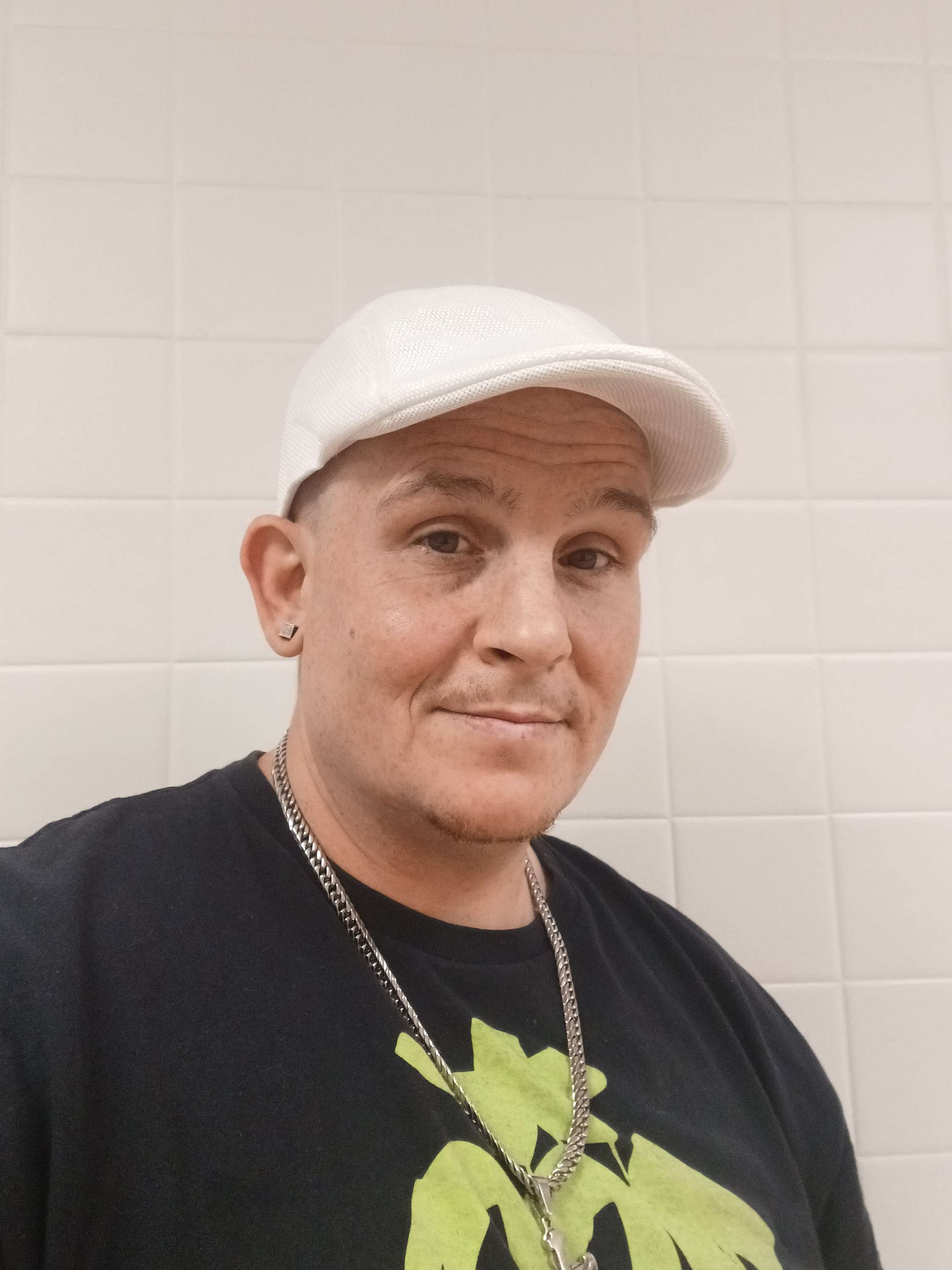
By Mikey Romano | SoberSuccess Coaching | June 30, 2026
You don't have to hit rock bottom to start questioning your relationship with substances.
I wish someone had told me that. Because for years, I thought unless I was living under a bridge or had lost literally everything — my family, my freedom, my dignity — I didn't qualify. I wasn't bad enough to need help. But I was dying. Slowly, quietly, privately. And nobody could see it. Not even me.
The truth is, the sober curious movement isn't about labels. It's not about whether you're an 'addict' or an 'alcoholic.' It's about asking one honest question: Is this substance making my life better or smaller?
That question changed my life. It might change yours too.
If you've been feeling that quiet pull to explore what life looks like without it — that whisper that keeps getting louder — here are 10 signs it's time to listen. And more importantly: what to actually do about it.
Sign #1 — You Can't Stop at 'Just One'
You tell yourself you'll have one drink. One hit. One pill. And then... it's 2am, you've lost count, and you're promising yourself again that tomorrow will be different.
This isn't a willpower problem. This is your brain's reward system being hijacked. Dopamine floods in, your prefrontal cortex — the part responsible for saying 'enough' — gets overridden, and the compulsion takes over. The biology is real. The shame you feel? That's not you being weak. That's the disease doing exactly what it's designed to do.
The fact that you notice it — that you even try to set a limit — means part of you is already fighting for something better.
Sign #2 — You Need It to Function
Not in the dramatic, shakes-and-seizures way (though that counts too). I'm talking about the quieter version: you need a drink to feel social. You need something to get through a stressful day at work. You can't fall asleep without it. You can't face your own thoughts without it.
When a substance becomes the bridge between you and normal life, that's dependency — and it sneaks up on you. One day it's 'just helps me relax,' the next it's the only thing standing between you and complete overwhelm. Sound familiar?
That's not living. That's managing. And you deserve more than just managing.
Sign #3 — You're Hiding It
Maybe you drink alone. Maybe you stash things. Maybe you minimize how much when someone asks. Maybe you wait until everyone's gone to bed before you pour that last one. Maybe you've mastered the art of seeming fine.
Here's what hiding it actually means: part of you already knows. Shame lives in secret. And if you're keeping secrets about how much you're using — from your partner, your kids, your doctor, your friends — that's not discretion. That's your conscience trying to tell you something.
I hid my use for over a decade. Not because I was dishonest by nature, but because the truth was too terrifying to face. The hiding will exhaust you. And eventually, it will catch up.
Sign #4 — Your Relationships Are Shifting
People who care about you have mentioned it. Maybe gently. Maybe not so gently. Maybe you've pulled away from people who don't use, because sober people make you uncomfortable. Maybe you've surrounded yourself with others who use, because it feels safer than being seen.
Addiction is isolating by design. It slowly replaces your real relationships with the substance. And when the people who love you most start to feel farther away — and the bottle or the pill feels closer — that gap is telling you something important.
The loneliness that comes with addiction isn't because you're unlovable. It's because something is standing between you and everyone who wants to love you.
Sign #5 — You've Already Tried to Cut Back (and Failed)
This is the one most people miss. You've tried to stop. You've set rules — only on weekends, only after 5pm, only at parties, never before noon. And the rules kept getting broken. The goalposts kept moving.
Most people interpret this as proof that they're hopeless. I want to flip that for you: the fact that you've tried means you've been fighting. The fact that the rules didn't hold means you were fighting with the wrong tools — not that you're too far gone.
Willpower alone doesn't work. I tried it for 25 years. What works is rewiring — addressing the root identity and the unconscious patterns driving the behavior. That's exactly what the SoberSuccess system was built to do.
Sign #6 — You Feel Worse, Not Better
The substance used to make you feel good. Now it just makes you feel less bad. The highs are shorter. The lows are deeper. The comedowns are brutal. The anxiety that used to go away now comes back harder every time.
This is called tolerance progression, and it's a neurological reality. Your brain has literally restructured itself around the substance. The natural dopamine pathways that used to make you feel joy — sunsets, laughter, connection, music — they've been dimmed. The drug or alcohol becomes the only thing that moves the needle. But even that is fading.
The good news: the brain can rewire. It takes time, support, and the right system — but the joy can come back. Real joy. Not numbed-out, chemically-induced relief — but actual, sustainable happiness.
Sign #7 — Your Health Is Taking Hits
Brain fog. Unexplained weight changes. Skin issues. Digestive problems. Constant fatigue. Your body keeps score even when your mind tries to rationalize. Liver. Heart. Gut. Brain. Every system in your body is affected by chronic substance use — many of them silently, for years before symptoms appear.
You might be chalking it up to stress, aging, or just 'being tired.' And maybe some of it is. But if your body has been sending you signals and you've been ignoring them, it's worth asking: what's the common denominator?
Your body is not your enemy. It's been trying to tell you something. It's time to start listening.
Sign #8 — You're Using to Cope
Stressed? Drink. Anxious? Use. Sad? Numb it. Celebrating? Use. Bored? Use. When every emotional state — the highs and the lows, the celebrations and the crises — gets filtered through the same substance, that's not coping. That's avoidance with extra steps.
The dangerous thing about using to cope is that it works — short-term. The anxiety drops. The pain dulls. The stress fades for a few hours. And your brain learns: 'This is how we handle hard things.' The problem is, the hard things don't go away. They compound. And your capacity to handle them without the substance shrinks every single time you reach for it instead.
Real recovery isn't about white-knuckling through emotions. It's about building actual tools to process them — NLP techniques, breath work, community, identity shifts. That's the work. And it's so much lighter than carrying the weight of addiction.
Sign #9 — The Mornings Are Getting Harder
The hangovers are lasting longer. The shame hits earlier. You're waking up with anxiety that wasn't there before — racing heart, dreaded texts, piecing together what happened. The regret is louder than it used to be.
I call this 'the morning mirror' — and it doesn't lie. Every morning is a summary of who you were the night before. If the mornings keep getting harder, your body and your soul are both trying to tell you the cost is rising.
I remember mornings I couldn't look at myself. Not because I was vain — because I couldn't recognize who I'd become. If you know that feeling, I'm not judging you. I'm telling you that it doesn't have to stay that way.
Sign #10 — You're Reading This
Here's the one nobody talks about: if you clicked on an article about being sober curious, something in you is already asking the question. You didn't stumble here by accident. Google doesn't algorithmically push 'signs you might have a drinking problem' unless something in you went looking for it.
That search — that click — that's the bravest thing you've done in a long time. Because it means some part of you, underneath all the noise and numbness, is still fighting for more. Still reaching for something better. Still believing it's possible.
Don't dismiss that. That's not weakness. That's the most alive part of you calling for help. Listen to it.
What Being 'Sober Curious' Actually Means
Here's what it does NOT mean: it doesn't mean you have to walk into an AA meeting tomorrow. It doesn't mean you need a label. It doesn't mean your life is over or that you've failed. And it definitely doesn't mean you have to have lost everything to qualify for a better life.
What it DOES mean: you're brave enough to ask honest questions. You're willing to experiment — even for a week — and see what you actually feel like without it. You're curious enough to wonder if the version of you that exists without substances might be someone worth knowing.
Sober curious is not a diagnosis. It's an invitation. An invitation to explore — with no judgment, no ultimatums, and no shame.
When I finally got sober, I didn't do it because I was 'sober curious.' I did it because I had a spiritual awakening in an abandoned house with no heat and no food, and I had finally run out of ways to survive my own choices. But looking back, there were a hundred moments of sober curiosity I ignored. A hundred whispers I silenced. I'm writing this because I don't want you to wait as long as I did. You don't have to earn the right to a better life by suffering more first.
What If I'm Not Ready Yet?
That's okay. Seriously. Readiness isn't binary.
Recovery doesn't always start with a dramatic 'I'm done' moment. Sometimes it starts with 'I'm not sure.' Sometimes it starts with downloading a free ebook at midnight because something in you couldn't sleep. Sometimes it starts with reading an article and feeling your chest tighten because too many of these signs hit home.
If you're not ready to commit to sobriety — that's fine. But you can still start. You can start by getting curious. By asking one honest question. By spending one week seeing how you feel without it. You don't have to know the destination to take the first step.
The Sober Curious Starter Kit isn't a 12-step program. It's not an intervention. It's a 5-step guide built for people exactly where you are right now — curious, maybe scared, not sure what this means yet. No rock bottom required.
The Science Behind Why It's So Hard to Stop
Here's something nobody tells you that completely changed how I understood my own struggle: addiction is not a moral failure. It is a brain disease. And understanding that doesn't excuse behavior — it explains it. And explanation is where healing begins.
When you use substances repeatedly, your brain's dopamine system — the reward circuitry — gets restructured. The nucleus accumbens floods with dopamine far beyond what any natural reward can produce. Over time, your brain compensates by producing less dopamine naturally and reducing the number of receptors that respond to it. Which means over time, you feel less pleasure from everything else — and you need more of the substance just to feel normal.
This is why 'just stop' doesn't work. It's neurologically like telling someone with broken legs to 'just walk.' The brain needs time, support, and specific techniques to rebuild those pathways. NLP (Neuro-Linguistic Programming) — which is the foundation of the SoberSuccess system — works directly with these patterns at the subconscious level, reprogramming the identity beliefs and emotional responses that keep people stuck in the cycle.
You are not broken. Your brain adapted to a brutal chemical environment. And it can adapt back.
What to Do If You Recognized Yourself
If you read those 10 signs and felt your stomach drop — good. That's awareness. That's the first step. Here's what to do next:
1. Get honest with yourself. No judgment. No shame. Just an honest look at your relationship with substances. Write it down if you need to. Say it out loud to yourself. The truth doesn't get smaller when you say it — but the fear around it does.
2. Try 7 days. Not forever. Just 7 days without the substance. See how you feel. See what comes up. Notice what emotions surface when the numbness lifts. That information is gold.
3. Get the right tools. Willpower alone won't work — I tried that for years. You need NLP-based techniques, identity shifts, and a structured system that addresses the root cause, not just the symptom. The Sober Curious Starter Kit is your starting point.
4. Talk to someone. Whether it's me, a therapist, a friend, or a community — don't do this alone. Isolation is addiction's best friend. Connection is its kryptonite.
Grab Your FREE Sober Curious Starter Kit
The 5-step guide to exploring sobriety on YOUR terms — no rock bottom required. No labels. No judgment. Just real tools that actually work, designed for people who are asking honest questions about their relationship with substances.
Inside you'll get: the identity shift exercise that changes everything, the 7-day experiment protocol, the craving interrupt technique, how to handle social situations without the substance, and the mindset shift that makes sober curiosity feel like freedom instead of deprivation.
Or explore the full SoberSuccess system at SoberSuccessAI.com — Free 3-day trial available now.
You Don't Have to Hit Bottom to Choose Up
The biggest lie addiction tells you is that you're not 'bad enough' yet. That voice is the disease talking — and it wants you to wait. It wants you to lose more before you fight back. It wants you to believe that rock bottom is a prerequisite.
It's not. Your sober curious moment — this moment, right now — is enough. The quiet voice that brought you here is enough. You are enough.
Don't wait for the hospital bed. Don't wait for the call from your kid's school. Don't wait until the relationship is over or the job is gone or the morning gets so dark you can't imagine facing it again.
If you're sober curious, that's enough. That's your starting line. The Sober Curious Starter Kit will meet you exactly where you are.
About Michael Romano
Michael Romano is a Certified Addiction Recovery Coach (CARC), founder of SoberSuccess Coaching, and creator of the 11-Pillar SoberSuccess Recovery System — the only NLP-based recovery program that rewires identity at the subconscious level. Born into addiction, Michael spent 25 years in the grip of heroin, crack cocaine, and alcohol before a spiritual awakening changed everything. His mission: to help others find their way out before they lose as much as he did. He works 1-on-1 with clients and has created an AI-powered recovery companion at SoberSuccessAI.com.
Let's Get It Baby! 💛


Comments